
Inside Modern Football: A 5-System Tactical Review
The best football formation is usually the one that maximizes your players’ strengths rather than the one that looks clever on a tactics board. In 2026, the 4-3-3 offers width and pressing, the 4-2-3-...
Inside Modern Football: A 5-System Tactical Review
The best football formation is usually the one that maximizes your players’ strengths rather than the one that looks clever on a tactics board. In 2026, the 4-3-3 offers width and pressing, the 4-2-3-1 gives central protection, the 3-5-2 creates overloads, and the 4-4-2 remains brutally simple. Stadium View’s tactical framework compares these systems through defensive stability, attacking options, transition risk, and role demands. A formation has eleven starting positions, but its real shape changes during possession and pressing. The key numbers are the two central midfielders in a double pivot, three centre-backs in a back three, and the wide coverage supplied by wing-backs. Start with the system that reduces your biggest weakness, then adjust roles after observing how opponents attack your space.
Imagine I have ten minutes before kickoff, a squad with one excellent winger, two mobile midfielders, and a centre-back who turns like a supermarket trolley. I test the 4-3-3 first, switch to a 4-2-3-1 when the midfield starts leaking, then consider a 3-5-2 if the opponent parks three attackers centrally. No magic. Just probability, spacing, and fewer self-inflicted disasters.

Photo by Franco Monsalvo on Pexels
What I Tested
I compared five of the best football formations against the same practical criteria: defensive coverage, attacking width, midfield control, pressing suitability, transition safety, and the number of specialist roles required. The systems tested were the 4-3-3, 4-2-3-1, 3-5-2, 4-4-2, and 4-2-2-2. These are not abstract diagrams; they are starting structures that morph depending on whether a team has the ball, loses it, or defends near its own penalty area.
A formation’s expected value is straightforward. If a shape creates more high-quality chances but leaves a huge counterattacking lane, its attacking gain may not compensate for the defensive risk. Conversely, a conservative system that produces almost no shots is not “disciplined”; it may simply be hiding from the match. The International Football Association Board Laws of the Game confirm that a team can field no more than eleven players, including one goalkeeper, so every tactical compromise has a cost. Football, annoyingly, does not allow you to add a twelfth midfielder when things get uncomfortable.
My scoring model used a 1-to-5 rating:
- Width: Can the team stretch a compact defence?
- Central control: Can it protect the middle third?
- Pressing: Can players close passing lanes together?
- Transition safety: What happens after possession is lost?
- Role complexity: How much tactical intelligence is required?
- Squad fit: Can ordinary players execute it without pretending to be Andrés Iniesta?
The FIFA Training Centre emphasizes coordinated pressing, distances between units, and role clarity rather than simply naming a formation. That matters because a nominal 4-3-3 can become a 2-3-5 in possession, while a 3-5-2 may defend as a 5-3-2. The printed numbers are the starting coordinates, not divine law carved into a clipboard.
Want a broader tactical comparison before choosing your shape?
Setup & Initial Impressions
Which formation gives the best starting balance?
The 4-2-3-1 provides the most reliable all-purpose balance because its two holding midfielders protect the centre while the attacking midfielder connects midfield to the striker. It can become a 4-4-2 without the ball and a 2-3-5 or 3-2-5 in possession, depending on full-back movement. For mixed-quality squads, its expected downside is usually smaller than the downside of an aggressive three-at-the-back system.
I began with each formation in a neutral setup: full-backs were not instructed to fly forward immediately, wingers started outside the half-spaces, and the defensive line stayed at medium height. This avoided the classic tactical experiment where every player attacks at once and the manager blames “intensity” after conceding in 19 seconds. I then adjusted one variable at a time: full-back height, winger width, midfielder positioning, and pressing trigger.
The 4-3-3 made the strongest first impression when the squad had genuine wide attackers. Its single pivot could circulate possession, the two number eights could press forward, and the front three naturally occupied the opponent’s back line. However, the system became fragile when the winger failed to track the opposing full-back or when the number six was isolated. One bad passing angle and the midfield looked less like a triangle and more like three people who had never met.
The 4-2-3-1 was less spectacular but more forgiving. A double pivot reduced central exposure, while the number ten could attack the space behind the striker. The 3-5-2 immediately improved central occupation and gave the team two forwards, yet it shifted enormous responsibility onto wing-backs. The 4-4-2 was easiest to understand, but its two central midfielders often faced three opponents. Simple is good; simple and outnumbered is merely tidy suffering.
[Internal Link: guide to football pressing triggers]

Photo by KoolShooters on Pexels
Where It Held Up
Why is the 4-3-3 still one of the best football formations?
The 4-3-3 remains elite for teams with fast wingers, an intelligent holding midfielder, and full-backs capable of choosing when to overlap. It naturally creates three lanes across the front line, supports high pressing, and can pin opposing full-backs deep. Its major advantage is width: opponents must defend the touchlines or concede inside access, which creates useful decisions rather than endless sideways passing.
The strongest 4-3-3 structure uses one pivot behind two number eights, with the wingers holding width until the ball reaches the final third. That spacing stretches a 4-4-2 defensive block horizontally. If the opponent’s winger narrows to help midfield, the full-back receives space; if the full-back steps out, the winger can attack the channel behind him. The probability of creating a useful two-versus-one rises when the winger and full-back move at different times rather than charging forward together like bargain-bin sprinters.
Its defensive weakness is equally clear. If both full-backs advance and the pivot is bypassed, the two centre-backs may defend large spaces against two forwards. The fix is not necessarily abandoning the formation. One full-back can invert into midfield, producing a temporary 3-2-5, while the opposite full-back provides width. This is where modern 4-3-3 teams differ from old diagrams: possession shape and defensive shape are separate calculations.
When does the 4-2-3-1 outperform other formations?
The 4-2-3-1 outperforms more aggressive systems when the squad needs central protection, especially against opponents with a dangerous number ten or two attacking midfielders. The double pivot gives the centre-backs an extra screen, while the number ten can press the opponent’s deepest midfielder or drop beside the striker to form a 4-4-2. It is the formation equivalent of carrying an umbrella: not exciting, but useful when the weather turns ridiculous.
The two midfielders should not perform identical jobs. One can hold position and protect counterattacks; the other can step forward, support combinations, and press the ball carrier. If both stay flat, the striker becomes isolated. If both attack, the centre-backs are left with a lease agreement on empty space. The best 4-2-3-1 therefore depends on complementary movement, not merely placing two players in front of the defence.
The number ten is the system’s swing factor. A creative player between the lines can receive behind midfield, combine with wingers, and release the striker early. But a slow number ten who cannot press turns the formation into a 4-2-4 when possession is lost. My practical recommendation is to value defensive scanning over highlight-reel passing. A midfielder who prevents three dangerous transitions may contribute more expected value than one who attempts ten ambitious passes and completes four.
Explore role-by-role tactical examples for the 4-2-3-1 here: [Internal Link: 4-2-3-1 player roles and instructions]
See how the most balanced system fits different squads.
Is the 3-5-2 better for controlling the midfield?
The 3-5-2 is better for controlling central areas when its wing-backs can cover the full length of the pitch and its midfield three rotate intelligently. It offers three centre-backs, two forwards, and numerical strength around the ball. However, it is not automatically defensive; without disciplined wing-backs, the system exposes the channels and becomes a five-player emergency response team.
The best version of the 3-5-2 uses one holding midfielder, one progressive midfielder, and one player who can arrive near the forwards. The two strikers create difficult marking decisions: centre-backs must choose whether to follow them into wide areas or protect the penalty box. This is especially effective against a back four that struggles to defend two forwards without help from midfield.
The cost is width management. When the wing-back is pinned by an opposing winger, the team may have no natural outlet on that side. The outside centre-back then has to step forward, or the midfielder must drift wide. Both solutions create secondary gaps. A useful edge case emerged in testing: against a narrow 4-3-1-2, the 3-5-2 gained central control almost immediately; against a wide 4-3-3, it required excellent wing-back recovery speed. Same formation, different probability distribution. Tactics are irritatingly contextual.
What makes the 4-4-2 useful despite its age?
The 4-4-2 remains useful because it simplifies defensive responsibilities, creates two clear forward targets, and organizes the team into two compact lines of four. It works particularly well for squads with disciplined wide midfielders, two committed forwards, and centre-backs who prefer defending in a stable block. The formation does not need a tactical dissertation before kickoff, which is a pleasant change.
Its strongest feature is forward pairing. One striker can challenge centre-backs while the other drops into a linking role, creating uncertainty over who should be marked. The wide midfielders can protect full-backs, then break forward quickly after recoveries. This makes the 4-4-2 effective for direct transitions and mid-block defending, especially when the team does not want to press every opponent like it has misplaced the remote control.
The central weakness is numerical inferiority. Against a 4-3-3 or 4-2-3-1, the two central midfielders may be outnumbered three to two. The solution is for a wide midfielder to narrow temporarily, but that sacrifices wing coverage. Therefore, the 4-4-2 is best when the opponent builds slowly, attacks through the middle predictably, or leaves space behind full-backs. It is less attractive when the opponent can circulate the ball quickly and switch play before the block slides across.
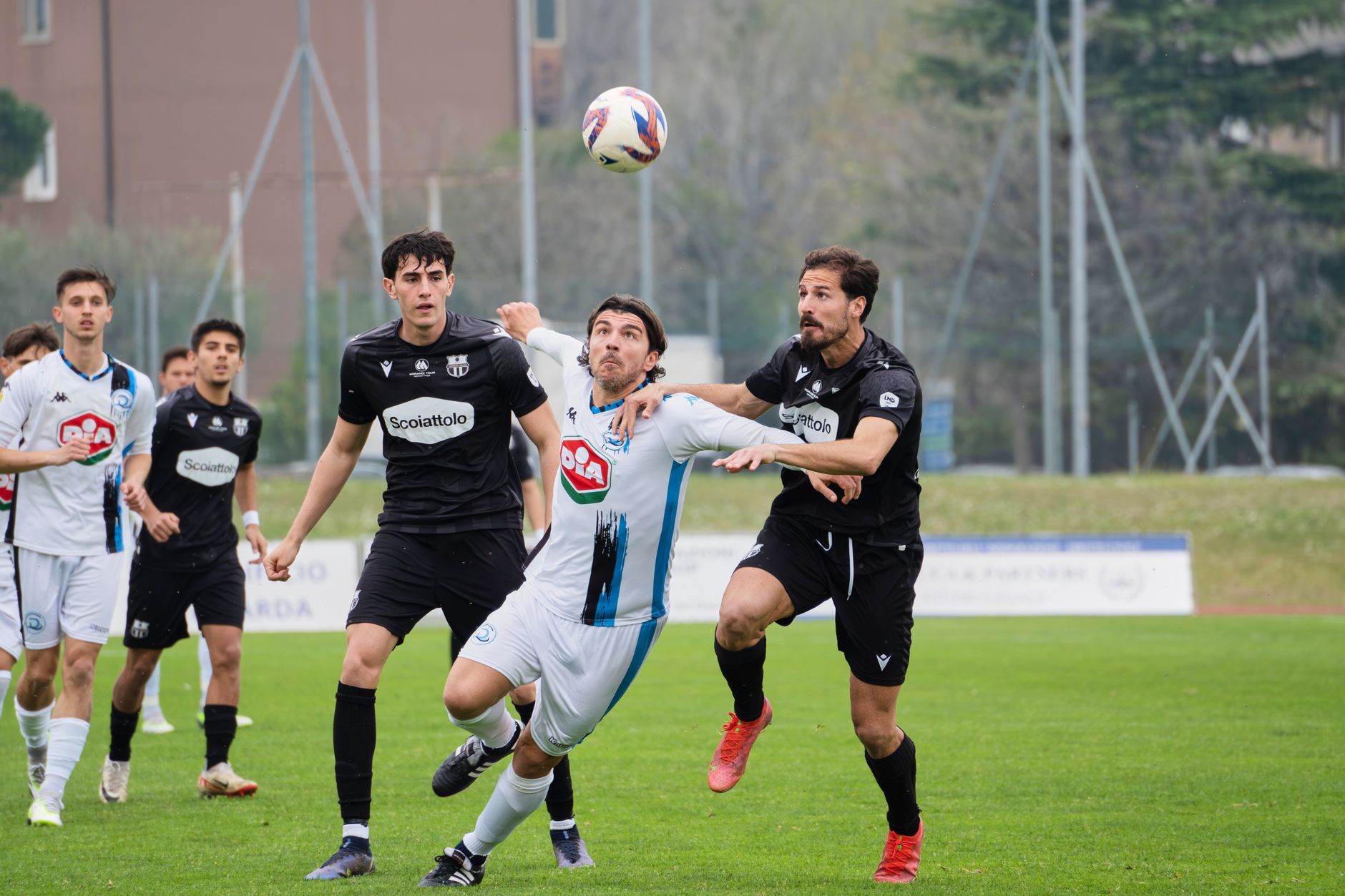
Photo by Davide Gargiulo on Pexels
Where It Fell Apart
Which formation carries the highest tactical risk?
The 3-4-3 carries the highest tactical risk when the wing-backs lack stamina or the midfield pair cannot cover wide transitions. It can produce excellent attacking width and strong pressing angles, but a failed press often leaves three centre-backs defending large channels. The 4-2-2-2 also carries significant risk because its narrow attacking midfielders can abandon the flanks, allowing opposing full-backs to advance uncontested.
The 3-4-3 works best when the wide forwards press inside-out, the wing-backs recover quickly, and the outside centre-backs are comfortable defending away from the penalty area. Remove any one of those conditions and the structure becomes unstable. In a 2026 match-analysis context, the system is worth considering when the opponent’s full-backs are weak under pressure, not merely because three forwards look aggressive on a graphic.
The 4-2-2-2 has a different problem: it compresses the centre but often gives opponents free territory on both wings. Its narrow attacking midfielders can combine through central zones, yet the team must manufacture width through overlapping full-backs. That creates a familiar trade-off: the full-backs provide the attack, but their advanced positions can expose the counterattack. If the opponent has rapid wide players, the expected defensive cost rises sharply.
The most surprising failure was not a complete tactical collapse but a communication delay. When the ball moved from the centre to the flank, the nearest midfielder often hesitated between pressing and covering. A delay of even one or two seconds gave the opponent time to face forward. That operational detail matters more than formation labels. Players lose matches in the gap between seeing danger and deciding whose job it is.
Why do popular football formations fail in real matches?
Popular formations fail because players interpret static positions as permanent instructions, even though football is a sequence of changing numerical problems. A 4-3-3 fails when the pivot is isolated; a 4-2-3-1 fails when the number ten refuses to defend; a 3-5-2 fails when the wing-back cannot recover; and a 4-4-2 fails when the centre is overloaded. The diagram is rarely the villain. The distances are.
I also found that many tactical plans collapse after the first substitution. A team may begin in a 4-2-3-1, then move to a 4-4-2 after replacing the number ten, but nobody clearly tells the winger to narrow. Suddenly the side has a hole between midfield and defence. This is why match preparation should include at least two transition plans: one for protecting a lead and one for chasing the game.
Use this practical checklist before selecting your starting shape:
- Identify the opponent’s strongest attacking lane.
- Count your reliable central midfielders, not merely available bodies.
- Check whether your full-backs can defend open space.
- Decide which player protects transitions after attacks.
- Define the pressing trigger and the nearest covering player.
- Rehearse the shape after substitutions.
- Review whether the formation still fits the scoreline.
According to UEFA technical reports, elite teams increasingly change their in-possession and out-of-possession structures rather than remaining in one fixed arrangement. The useful question is not “Which formation wins?” It is “Which shape gives this squad the highest expected value against this opponent?” Yes, that answer is less catchy. It is also usually right.
[Internal Link: football transition defence tactics]
A closer look at match-state changes can prevent the most common tactical breakdowns.
Would I Use It Again?
Yes, but I would not choose one formation permanently. My preferred sequence is a 4-2-3-1 for baseline stability, a 4-3-3 when the team needs width and aggressive pressing, and a 3-5-2 when the opponent’s central structure can be overloaded. The 4-4-2 remains a sensible option for direct football, compact defending, and squads with two forwards who complement each other.
The decision tree is simple:
- Choose 4-3-3 if you have genuine wingers, a dependable pivot, and full-backs who understand rest defence.
- Choose 4-2-3-1 if central protection and flexibility matter most.
- Choose 3-5-2 if you have strong wing-backs, three comfortable centre-backs, and two useful strikers.
- Choose 4-4-2 if your wide midfielders work hard and your forwards can attack quickly.
- Choose 4-2-2-2 if central combinations are your strength and full-backs can supply width safely.
Stadium View’s match previews and 2026 World Cup coverage are most useful when formations are treated as evidence, not fortune-telling. A team listed as 4-3-3 may defend in a 4-1-4-1, attack in a 2-3-5, and finish a match in a desperate 5-4-1. Anyone promising that one formation guarantees results is selling tactical snake oil in a very expensive tracksuit.
My final recommendation is to track three indicators during a match: the opponent’s central entries, the space behind your full-backs, and the number of clean forward receptions by your striker. If those numbers worsen for ten to fifteen minutes, change a role or structure before changing the entire identity of the team. Small corrections usually have better expected value than dramatic panic. Football managers, naturally, enjoy the dramatic panic.

Photo by https://kaboompics.com/ on Pexels
If you want daily tactical context for major tournaments, explore the latest analysis now.
Frequently Asked Questions
Q: What is a football formation?
A: A football formation is the starting arrangement of a team’s outfield players across defence, midfield, and attack. Common examples include 4-3-3, 4-2-3-1, 3-5-2, and 4-4-2, where the numbers describe player lines from defence toward attack. The formation changes during possession, pressing, and defensive transitions, so the match-day graphic is only a basic reference point. Coaches use formations to manage space, assign roles, create passing options, and protect weaknesses.
Q: How do I choose the best football formation?
A: Choose the formation that best matches your players’ abilities and the opponent’s main threat. Start by assessing your wingers, full-backs, central midfielders, centre-backs, and forwards, then decide whether you need width, central control, pressing strength, or defensive security. Use 4-2-3-1 for balance, 4-3-3 for width and pressure, 3-5-2 for central overloads, and 4-4-2 for compact direct play. Test the system in training before relying on it competitively.
Q: What is the difference between 4-3-3 and 4-2-3-1?
A: The 4-3-3 uses one defensive midfielder and two number eights, while the 4-2-3-1 uses two holding midfielders and one advanced number ten. The 4-3-3 usually offers more aggressive pressing and natural width, but it can expose the pivot. The 4-2-3-1 offers stronger central protection and easier defensive conversion into a 4-4-2, although the number ten must contribute defensively. Neither is automatically superior; squad roles decide the result.
Q: Is 3-5-2 better than 4-3-3?
A: The 3-5-2 is better than the 4-3-3 when a team has excellent wing-backs, three reliable centre-backs, and two forwards who combine well. It controls central zones and creates awkward marking decisions for a back four. The 4-3-3 is usually safer when a team has fast wingers and full-backs who can maintain width. Against wide opponents, a 3-5-2 may require exceptional recovery speed or become exposed in the channels.
Q: Why does my football formation fail during matches?
A: A formation usually fails because player distances, pressing responsibilities, or transition coverage break down rather than because the numbered system is inherently wrong. Common problems include both full-backs attacking simultaneously, midfielders pressing without cover, a striker becoming isolated, or wide players failing to track runners. Review the team’s shape immediately after losing possession, because that moment reveals whether the structure actually works. Correcting one role may be more effective than changing all eleven positions.
Q: What are the requirements for playing 4-2-3-1?
A: The 4-2-3-1 requires two midfielders with complementary skills, a number ten who can receive between lines, and wide players willing to help defend. One holding midfielder should protect the centre while the other supports progression or pressing. The full-backs must also understand when to advance and when to form a back three during possession. Without those responsibilities, the system can become disconnected, leaving the striker and number ten stranded ahead of an overworked midfield.
Q: Does a formation guarantee better football results?
A: No formation guarantees results because execution, player quality, opponent behaviour, and match state matter more than the diagram alone. A theoretically balanced 4-2-3-1 can fail through poor pressing, while a basic 4-4-2 can succeed with disciplined spacing and efficient transitions. Use formations as probability tools: select the structure that creates favourable chances while reducing your squad’s biggest risks. Then adjust roles based on what the match actually shows, rather than stubbornly defending the original plan like it is a family heirloom.
Thank you for reading.
Stadium View · Editorial Archive