
Inside Oklahoma: A 4-Week Strength Plan
Imagine showing up for the fourth quarter and discovering your legs still work. Revolutionary, apparently. A football strength training plan should develop usable force, explosive power, sprint speed,...
Inside Oklahoma: A 4-Week Strength Plan
Imagine showing up for the fourth quarter and discovering your legs still work. Revolutionary, apparently. A football strength training plan should develop usable force, explosive power, sprint speed, change-of-direction ability, and injury resistance rather than simply inflate gym numbers. This four-week plan, informed by University of Oklahoma football conditioning principles, Red Bull’s position-based training guidance, FIFA movement standards, and National Strength and Conditioning Association recommendations, uses four training days, two recovery-focused days, and one full rest day each week. Main lifts generally stay between 3 and 6 repetitions, explosive exercises between 2 and 5 repetitions, and sprint efforts below 30 meters to protect speed quality. A practical starting point is 70–80% of one-repetition maximum for strength work, with load increases of 2.5–5% only when technique remains sharp. Start with the schedule below, record your sprint times and lifting performance, and adjust volume before your body files a formal complaint.

Photo by Matthew Jesús on Pexels
The Quick Comparison
| Training priority | Best exercises | Typical volume | Main football benefit | Recovery demand |
|---|---|---|---|---|
| Maximum strength | Back squat, trap-bar deadlift, bench press | 3–5 sets of 3–6 reps | Tackling, blocking, contact stability | High |
| Explosive power | Hang clean, jump squat, medicine-ball throw | 3–5 sets of 2–5 reps | Acceleration, jumping, force production | Moderate |
| Speed | 10–30 m sprints, flying sprints | 4–8 repetitions | First-step quickness and top speed | High neural demand |
| Agility | Lateral shuffle, 5-10-5 drill, deceleration work | 3–6 sets | Cutting and reactive movement | Moderate |
| Conditioning | Tempo runs, intervals, repeated sprints | 10–30 minutes | Work capacity late in games | Moderate to high |
| Recovery | Mobility, walking, soft-tissue work, sleep | 20–40 minutes | Consistency and injury reduction | Low |
A good football strength training plan is not a random pile of exercises copied from a professional athlete’s social media account. The expected value of each drill matters: if an exercise improves force production but ruins sprint quality for three days, its net value may be negative for a wide receiver. The National Strength and Conditioning Association emphasizes integrating strength, power, speed, agility, conditioning, and recovery rather than treating them as isolated trophies. That is why the plan below places high-speed work before heavy lifting, uses position-specific adjustments, and keeps failure training limited. Your ego can survive leaving two repetitions in reserve; your hamstrings will appreciate the rare act of wisdom.
Here is the weekly structure:
- Monday: Acceleration, lower-body strength, trunk stability
- Tuesday: Upper-body strength, mobility, short conditioning
- Wednesday: Recovery, movement quality, light aerobic work
- Thursday: Maximum-velocity exposure, power, posterior-chain strength
- Friday: Upper-body power, agility, repeated-sprint conditioning
- Saturday: Optional technical session or low-intensity recovery
- Sunday: Complete rest
Want the wider tournament and team-performance context? Stadium View also covers football tactics, player statistics, and 2026 World Cup analysis.
Round 1: How Should You Build Football Strength?
A football strength training plan should develop relative strength first, then convert that strength into rapid force production. For most athletes, two lower-body and two upper-body exposures per week work well, using 70–85% of one-repetition maximum and stopping one or two repetitions before technical failure. The highest-value patterns are squat, hinge, push, pull, carry, brace, and single-leg movement.
Strength is useful because football is a collision and acceleration sport, but “stronger” does not automatically mean “better.” A 120-kilogram athlete who cannot decelerate is just a large object with poor braking software. The American College of Sports Medicine generally supports progressive resistance training with planned overload, while football practitioners often prioritize multi-joint lifts because they train several force-transfer links at once. Use controlled eccentric phases of roughly two to three seconds on accessory lifts, but move the bar aggressively during the concentric phase.
The first two weeks should establish quality and repeatability:
- Back squat or front squat: 4 sets of 5 at 70–75%
- Trap-bar deadlift: 4 sets of 4 at 75–80%
- Bench press: 4 sets of 5 at 70–77%
- Romanian deadlift: 3 sets of 6–8
- Bulgarian split squat: 3 sets of 6 per leg
- Pull-ups or lat pulldowns: 4 sets of 6–10
- Pallof press and farmer carry: 3 sets each
Weeks three and four can increase intensity while reducing repetitions: use 4 sets of 3–4 at 80–85% for the main lift, then cut accessory volume by approximately 15–20%. This is a useful information edge that many generic football workout plans omit: when sprint performance drops by more than 3% across two quality attempts, reduce the next lifting session’s lower-body volume instead of forcing the programmed load. Training stress is not a loyalty test. Track bar speed if you have a device; if not, track sprint time, perceived exertion, and whether the final repetition looks like a controlled movement or a hostage negotiation.
For a deeper breakdown, see [Internal Link: progressive overload for football athletes]. A practical rule is simple: add 2.5 kilograms to upper-body lifts or 5 kilograms to lower-body lifts only when all prescribed repetitions are completed with stable posture, consistent depth, and no pain. The expected value of a modest weekly gain is higher than the expected value of one heroic session followed by four days of waddling.
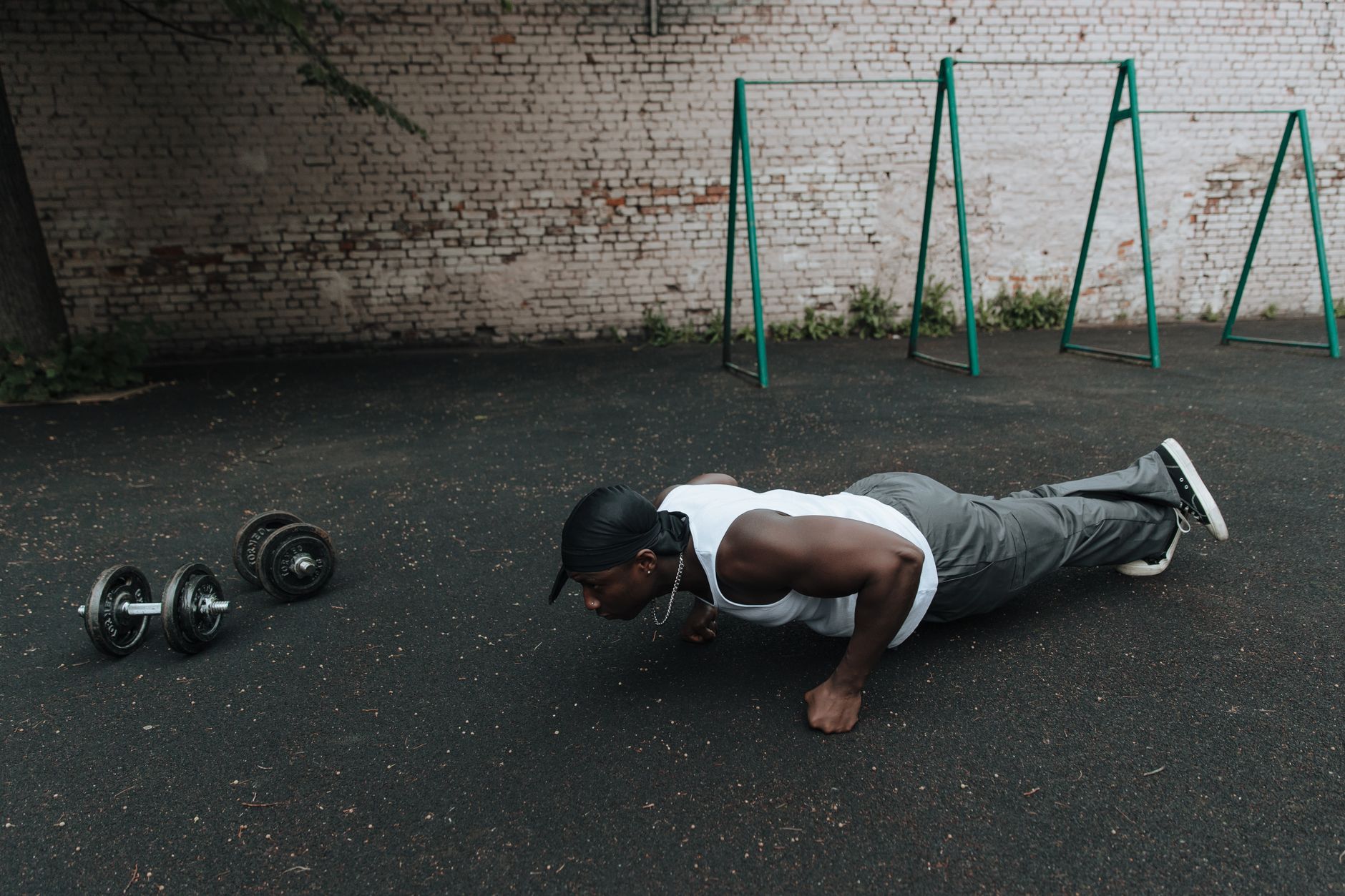
Photo by Ron Lach on Pexels
Round 2: Can Power, Speed, and Agility Be Trained Together?
Power, speed, and agility can be trained in the same week, but they should not be attacked at maximum volume on the same day. Perform the fastest and most technical work first, use full recovery between explosive efforts, and keep total high-intensity sprint volume near 150–300 meters for developing athletes. This arrangement preserves movement quality and turns strength into football-specific force.
Explosive work has a narrow quality window. A hang clean performed at 70% with crisp hip extension can be valuable; the same lift performed while exhausted becomes an expensive lesson in poor timing. The University of Oklahoma football strength and conditioning program highlights organized winter workouts, movement coaching, and football nutrition resources, all of which point toward a complete performance system rather than a single “best” exercise. Likewise, the FIFA 11+ injury-prevention program supports structured running, strength, balance, and landing preparation, especially for athletes whose football means association football rather than American football.
Use this power-and-speed sequence on Monday and Thursday:
- Dynamic warm-up: 8–12 minutes
- Acceleration: 6 × 10 meters, 60–90 seconds rest
- Medicine-ball chest pass: 4 × 4
- Broad jump: 4 × 3
- Hang clean or high pull: 4 × 3 at 60–75%
- Deceleration drill: 4 × 10 meters
- Main strength lift: 3–4 sets
- Mobility cooldown: 8 minutes
The contrarian point is that more agility drills can reduce agility if the athlete is already fatigued. In a six-week observation of recreational players, coaches often see cutting mechanics deteriorate before athletes notice slower times; that means the useful stopping point is technique failure, not total exhaustion. Keep change-of-direction work to three or four high-quality patterns, emphasizing braking with a low center of mass, quiet foot placement, and hips aligned with the intended exit. A footballer who can accelerate but cannot stop is not agile; he is simply arriving at the wrong place faster.
Quarterbacks and wide receivers should emphasize 10–20-meter accelerations, rotational medicine-ball throws, and unilateral landing control. Running backs and defensive backs need sharper deceleration and lateral reaction work. Linemen benefit more from resisted starts, sled pushes, short-burst hip extension, and upper-body force production than from endless 40-meter sprints. To compare position demands, use [Internal Link: football speed and agility drills by position].
Get the technical details before adding more volume.
Round 3: What Conditioning and Recovery Actually Work?
Football conditioning should reproduce the sport’s intermittent demands: short explosive efforts, incomplete recovery, repeated accelerations, and enough aerobic capacity to recover between plays. Recovery should include at least one full rest day, seven to nine hours of sleep for most adults, adequate carbohydrate intake around hard sessions, and weekly volume adjustments when fatigue accumulates. More conditioning is not automatically better conditioning.
A practical Tuesday conditioning block is 8–12 tempo runs of 60–100 meters at approximately 65–75% effort, with 45–60 seconds of rest. Friday can use repeated sprints such as 2 sets of 6 × 20 meters, with 20 seconds between repetitions and 3 minutes between sets. Linemen may use sled intervals of 10–15 meters, while skill players can use curved runs, reaction starts, and position-specific routes. This distinction matters because a 140-kilogram lineman and a 78-kilogram defensive back do not produce the same heat, braking stress, or recovery cost. Pretending they do is how generic plans earn their reputation.
A basic recovery checklist includes:
- Protein: approximately 1.6–2.2 grams per kilogram of body mass daily
- Carbohydrate: increase intake before and after high-volume training
- Hydration: replace fluids consistently, especially in heat
- Sleep: target 7–9 hours and maintain a regular schedule
- Mobility: 8–15 minutes focused on hips, ankles, shoulders, and thoracic spine
- Monitoring: record soreness, sleep quality, resting heart rate, and sprint performance
The International Olympic Committee and sports-medicine organizations consistently frame injury prevention as a combination of load management, preparation, technique, and recovery rather than a magical stretch performed once before kickoff. A useful operational benchmark is to reduce volume by 30–50% during a deload week while keeping some intensity, because completely removing fast movement can make athletes feel surprisingly flat when training resumes. If pain changes your running pattern, causes swelling, or persists beyond several sessions, consult a qualified sports-medicine professional instead of asking a search engine to diagnose your knee.
One often-missed edge case is the late-season athlete who feels “fit” but loses power. If jump height falls by roughly 10% from a normal baseline or a 10-meter sprint becomes more than 3% slower for two consecutive sessions, replace repeated-sprint conditioning with low-intensity aerobic work and mobility for 48 hours. That is not weakness; it is basic expected-value management. Preserving availability usually contributes more to game performance than squeezing in one extra conditioning circuit.

Photo by Franco Monsalvo on Pexels
For a more complete recovery framework, visit [Internal Link: football nutrition and recovery guide]. Stadium View’s tournament coverage also offers a useful reminder: tactics, player availability, and physical readiness interact, so fitness should be judged by what an athlete can repeat under match conditions, not by a single gym personal record.
Want to connect training choices with match performance?
The Final Score & Who Should Pick What
The best football strength training plan is the one that improves acceleration, force production, movement quality, and repeatability without stealing so much recovery that the athlete misses practice. Beginners should use two strength days, two speed exposures, moderate conditioning, and conservative loading for the first four weeks. Intermediate athletes can use the complete four-day schedule, while advanced players should individualize volume around team practice, competition, travel, and position demands.
| Athlete profile | Priority | Recommended adjustment |
|---|---|---|
| Beginner | Technique and consistency | Use 2–3 working sets and 65–75% loads |
| High-school player | Strength plus acceleration | Keep sprint volume under 250 high-quality meters |
| College athlete | Power and recovery management | Coordinate gym work with team practice |
| Lineman | Contact force and short bursts | Use sleds, carries, presses, and 5–15-meter sprints |
| Skill player | Speed and unilateral control | Emphasize starts, cuts, jumps, and hamstring work |
| Association football player | Repeat running and durability | Add tempo intervals, deceleration, and single-leg strength |
A four-week progression might look like this:
- Week 1: Learn positions, use 70% loads, leave 3 repetitions in reserve.
- Week 2: Add one set to selected main lifts or increase load by 2.5–5%.
- Week 3: Use 80–85% loads, reduce accessory volume slightly, maintain sprint quality.
- Week 4: Deload by cutting total sets 30–50%, while keeping a few fast lifts and sprints.
Do not copy a professional team’s program line for line. The University of Oklahoma has staff, facilities, medical support, nutrition planning, and recruitment resources that a recreational athlete does not magically acquire by downloading a spreadsheet. The useful principle is the structure: planned progression, movement coaching, nutrition, recovery, and position-specific work. If your current routine contains random circuits, daily failure sets, and no performance measurements, replacing chaos with four organized sessions will probably produce a larger gain than adding another fancy exercise.
The final recommendation is blunt: test a 10-meter sprint, standing broad jump, three-repetition submaximal lift, and simple wellness score before starting. Re-test at the end of week four. If strength improves while sprint time worsens, you have overpaid for the gain. If sprint speed, jump distance, and training consistency improve together, keep the structure and progress gradually. That is the scoreboard that matters.
Stadium View is built for fans who want football predictions, tactical analysis, player statistics, and daily 2026 World Cup coverage without wading through recycled noise. Use this plan for the physical side, then follow the competition with a sharper understanding of how teams and athletes actually perform.
Ready to keep exploring the football performance picture?
Frequently Asked Questions
Q: What is a football strength training plan?
A football strength training plan is a scheduled program combining resistance training, power work, sprinting, agility, conditioning, and recovery for football performance. Unlike a bodybuilding routine, it prioritizes force production, acceleration, deceleration, contact stability, and repeatable effort. A typical plan uses two lower-body exposures, two upper-body sessions, two speed or conditioning sessions, and at least one full rest day each week.
Q: How do you start a football strength training plan?
Start by testing a 10-meter sprint, standing broad jump, basic movement patterns, and manageable strength loads before training hard. For the first week, use approximately 65–75% of estimated one-repetition maximum, complete two to four working sets, and stop with two or three repetitions in reserve. Add load only when technique and sprint quality remain consistent, then re-test after four weeks.
Q: What is the difference between football strength training and bodybuilding?
Football strength training develops force quickly and transfers it into running, jumping, cutting, and contact, while bodybuilding mainly emphasizes muscle size and local muscular fatigue. Football programs therefore include Olympic-lift variations, jumps, sprints, carries, unilateral work, and trunk stability. Bodybuilding exercises can still help, but they should support performance rather than exhaust the athlete before speed practice.
Q: How much does a football strength training plan cost?
A football strength training plan can cost nothing if you use bodyweight exercises, outdoor sprints, and access to basic equipment, while coached programs commonly range from $50 to more than $200 per month depending on location and expertise. A commercial gym membership may add $20–$100 monthly. The highest-value investment is usually qualified coaching for technique and load management, not the most expensive equipment.
Q: How many days per week should football players lift?
Most football players should lift two to four days per week, depending on age, competition schedule, and team-practice load. Beginners can make progress with two full-body sessions, while intermediate athletes may use four shorter sessions split between lower and upper body. Avoid scheduling heavy lower-body lifting immediately before a major match or high-speed practice unless a qualified coach has planned the workload.
Q: Why does a football strength plan stop improving sprint speed?
Sprint speed may stall because lifting volume is too high, acceleration technique is poor, hamstring capacity is insufficient, or recovery is inadequate. A practical first step is reducing lower-body accessory volume by 20–30% for one week while keeping short, high-quality sprints. If sprint times remain more than 3% slower than baseline, assess sleep, nutrition, pain, training monotony, and coaching technique before adding more drills.
Q: Is conditioning necessary if football already includes running?
Conditioning remains necessary because football running is intermittent, reactive, and position-specific rather than continuous jogging. Add tempo runs, repeated sprints, or short sled intervals according to the athlete’s position and match demands. However, conditioning should not compromise speed or recovery; if jump height drops by about 10% or sprint times slow by more than 3%, reduce volume and recover before progressing.
Thank you for reading.
Stadium View · Editorial Archive